Real-world examples of Diwani script across manuscripts, signage, and calligraphic compositions.
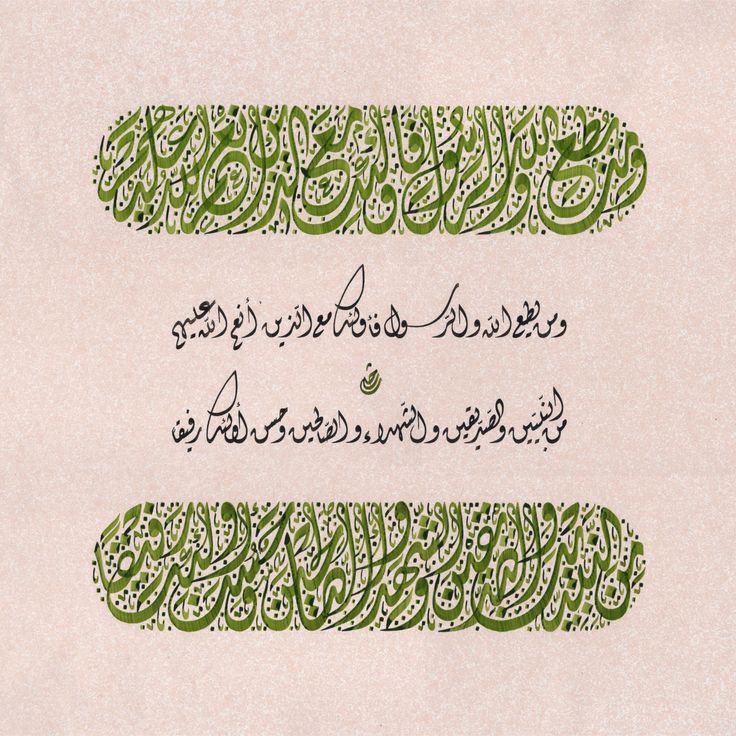
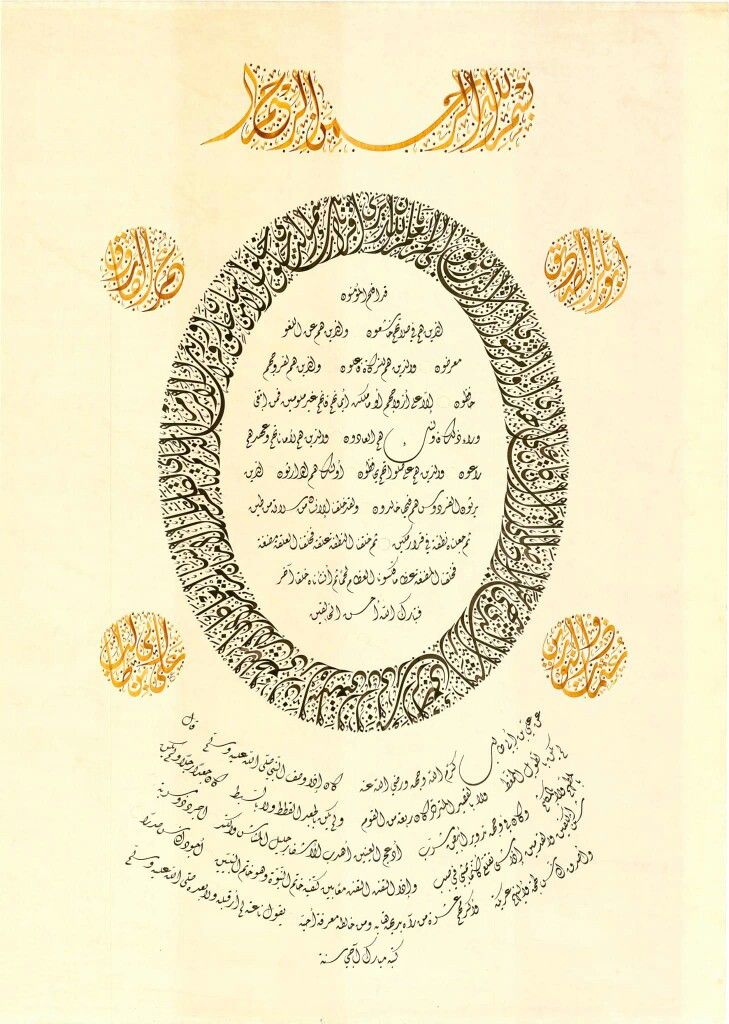
A Diwani Jali composition where dense ornamental dots fill the spaces between flowing letterforms. The Jali (clear) variant of Diwani uses decorative infill to create a rich, textile-like texture, often used for royal decrees and ceremonial documents in the Ottoman Empire.
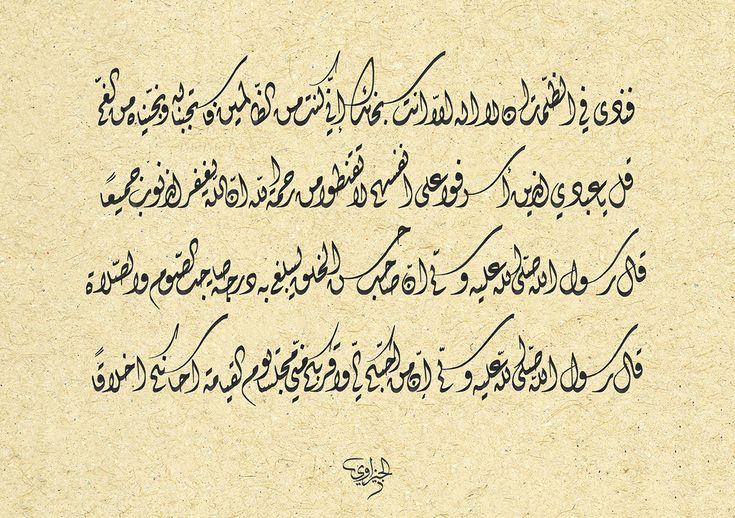
A page of classical Diwani script on aged paper, showing the script's characteristic flowing, connected strokes with exaggerated curves. Diwani was developed specifically for Ottoman chancellery use, where its complexity made it difficult to forge -- security through calligraphic intricacy.
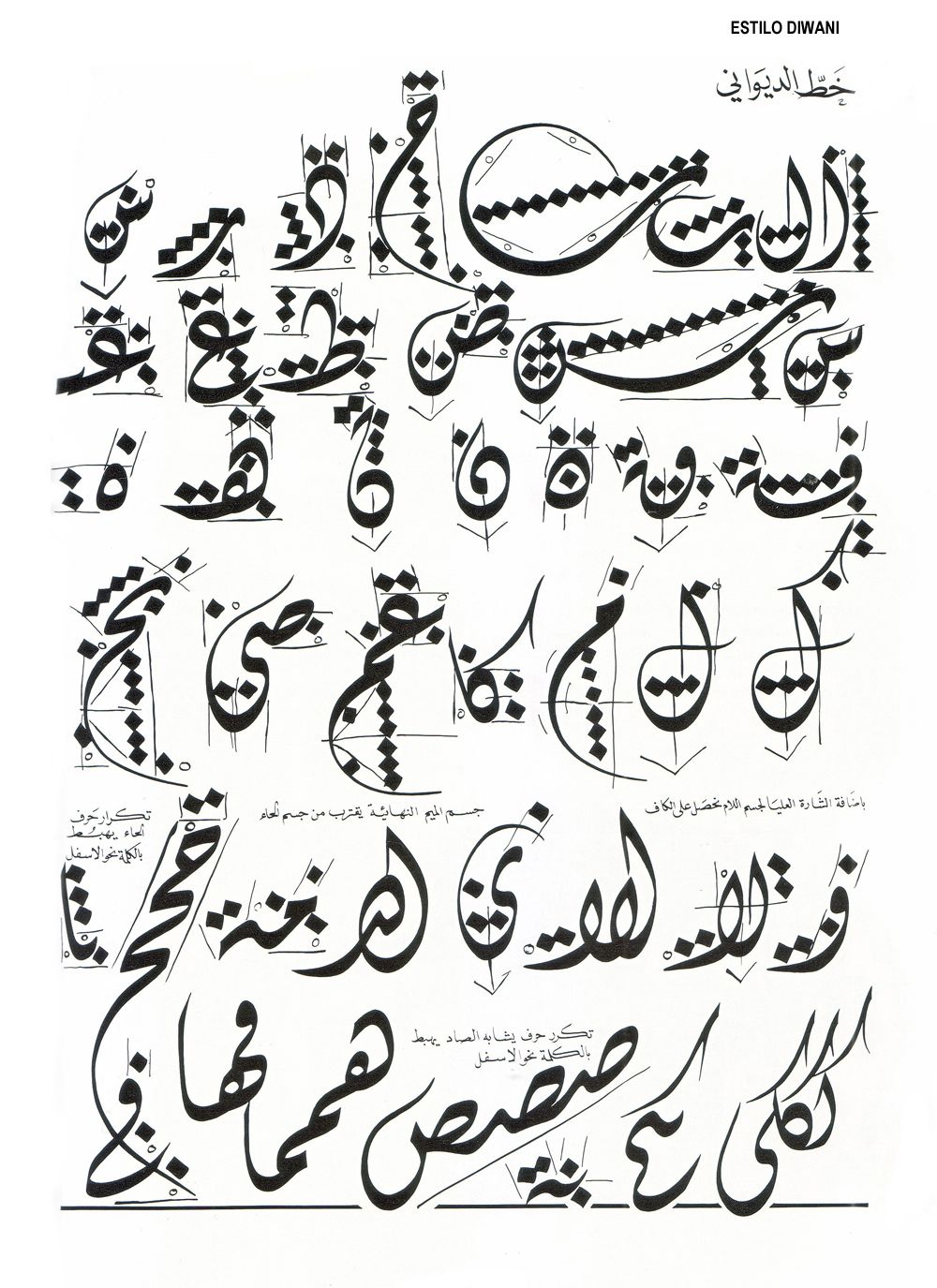
A Diwani script alphabet chart with structural annotations showing the proportional system behind each letter. The rhombic dot grid guides visible alongside the letterforms reveal the geometric logic underlying Diwani's seemingly free-flowing curves.
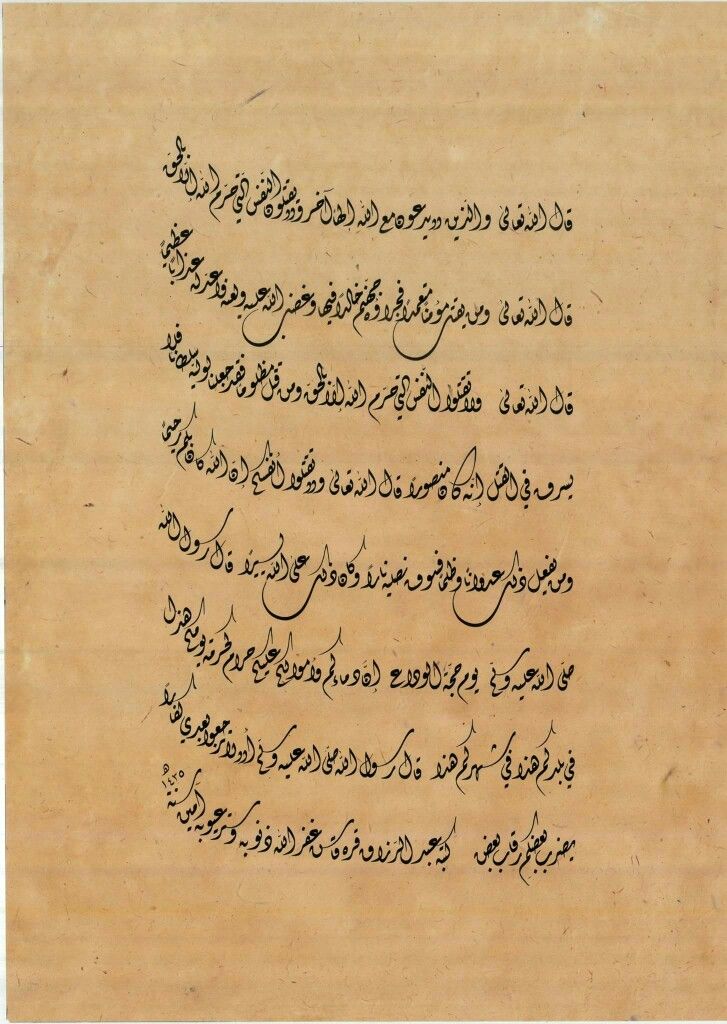
A historical Diwani manuscript page showing continuous flowing text. The script's distinctive features are visible: sweeping horizontal extensions, deeply curved bowls, and letters that connect in long, unbroken rhythmic sequences across the line.
An ornate Diwani Jali composition featuring text arranged in a circular medallion form with gold accents. This kind of shaped calligraphy demonstrates the highest level of Diwani mastery, where the script bends to fit architectural and decorative formats while remaining legible.