Thuluth
الثُّلث
I'm the loud script on every old mosque wall.
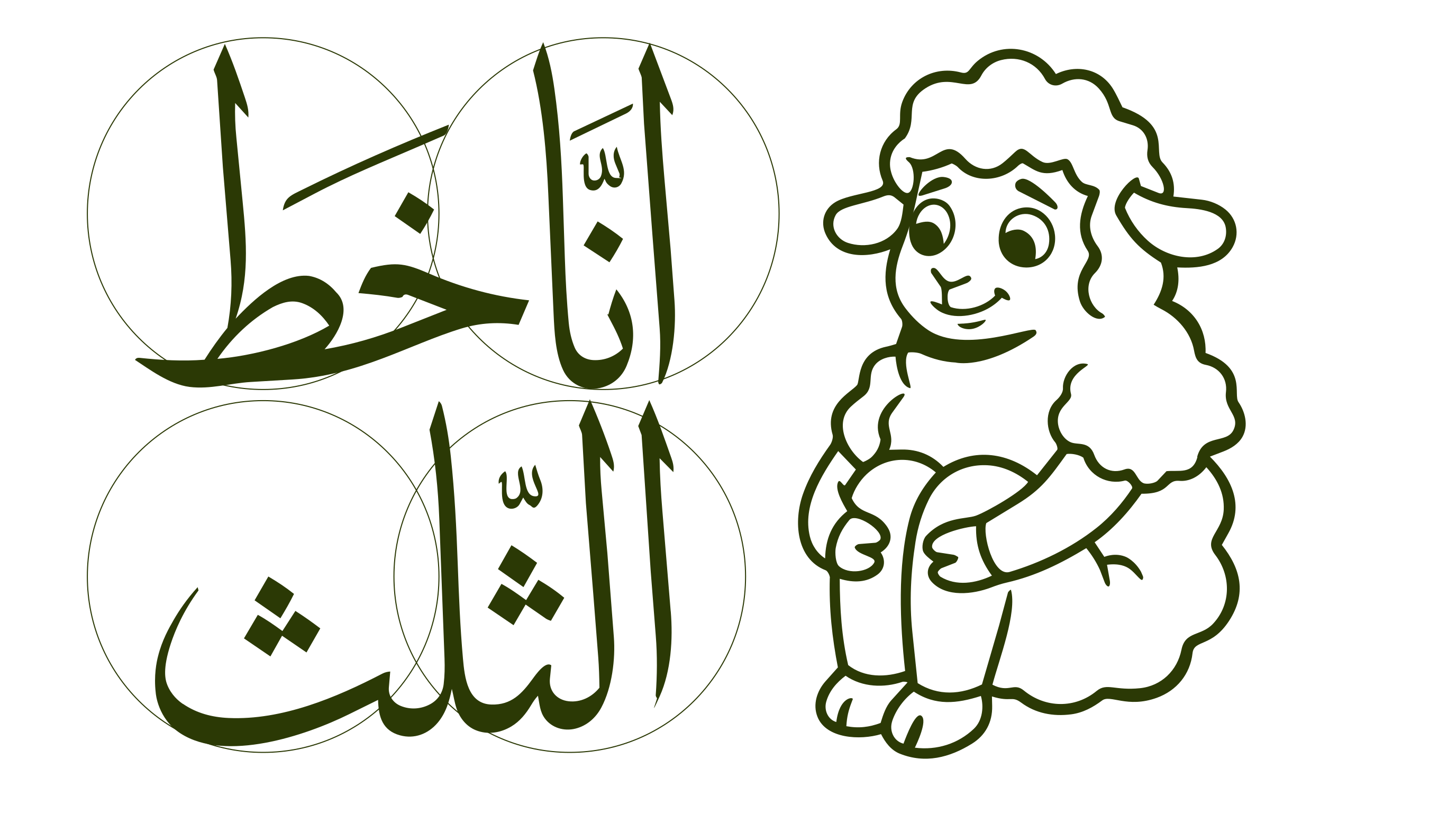
I'm Thuluth, tall, sweeping, monumental. You've seen me on Qur'anic headings and inscriptions, where the writing has to carry weight as well as words. I'm not built for paragraphs; I'm built to hold a wall. I came out of the Abbasid era when calligraphy became governed by proportion, and Ibn Muqla helped set my rules.
Visual Character
Visually, Thuluth is known for its tall verticals, sweeping curves, and balanced stroke contrast, giving it a strong sense of rhythm and monumentality. Because of its clarity at large sizes and its ability to form elegant, architectural compositions, it has been widely used for Qur'anic headings, inscriptions, and mosque decoration, where the script is meant to carry both meaning and presence.