Nuqta (Dot Unit)
النقطة
I notice this dot is doing more than you think.
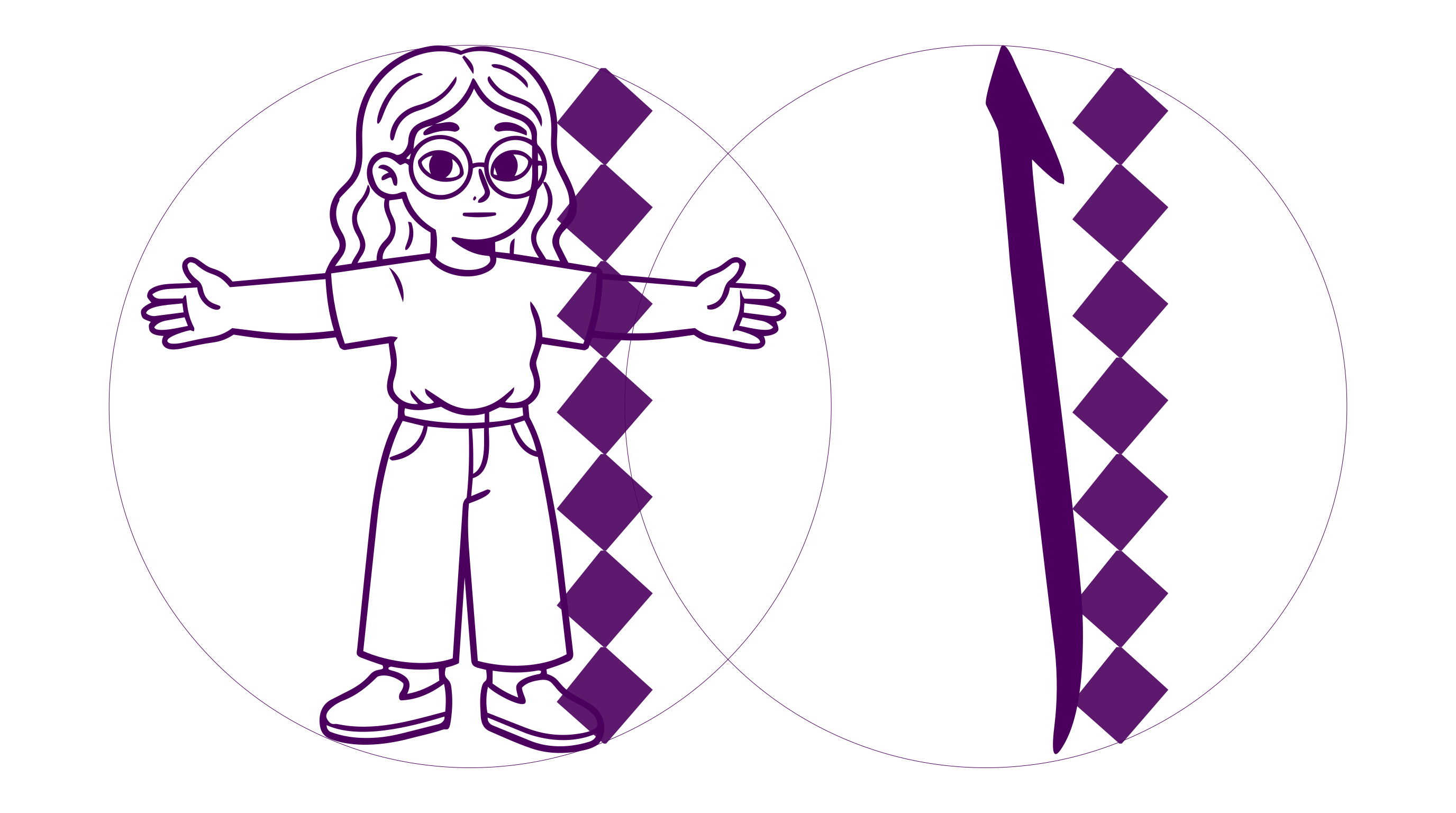
I watch a calligrapher press the qalam once and leave a small diamond, a nuqta. To me it isn't just punctuation; it's the unit. Every proportion in classical Arabic, the height of an alef, the curve of a waw, is measured in nuqtas stacked end to end. Change the pen, you change the whole script.
Proportional System
The calligrapher Ibn Muqla (10th century) formalized the nuqta-based proportional system, and it was later refined by Ibn al-Bawwab and Yaqut al-Mustaʿsimi. In this system, the height of an alef is typically defined as a specific number of nuqta (often 5–7 depending on the script), and all other letters derive their proportions from this reference. Changing the pen width scales the entire script proportionally, a self-consistent system that modern type designers still reference when designing Arabic fonts.