Real-world examples of Kufi script across manuscripts, signage, and calligraphic compositions.
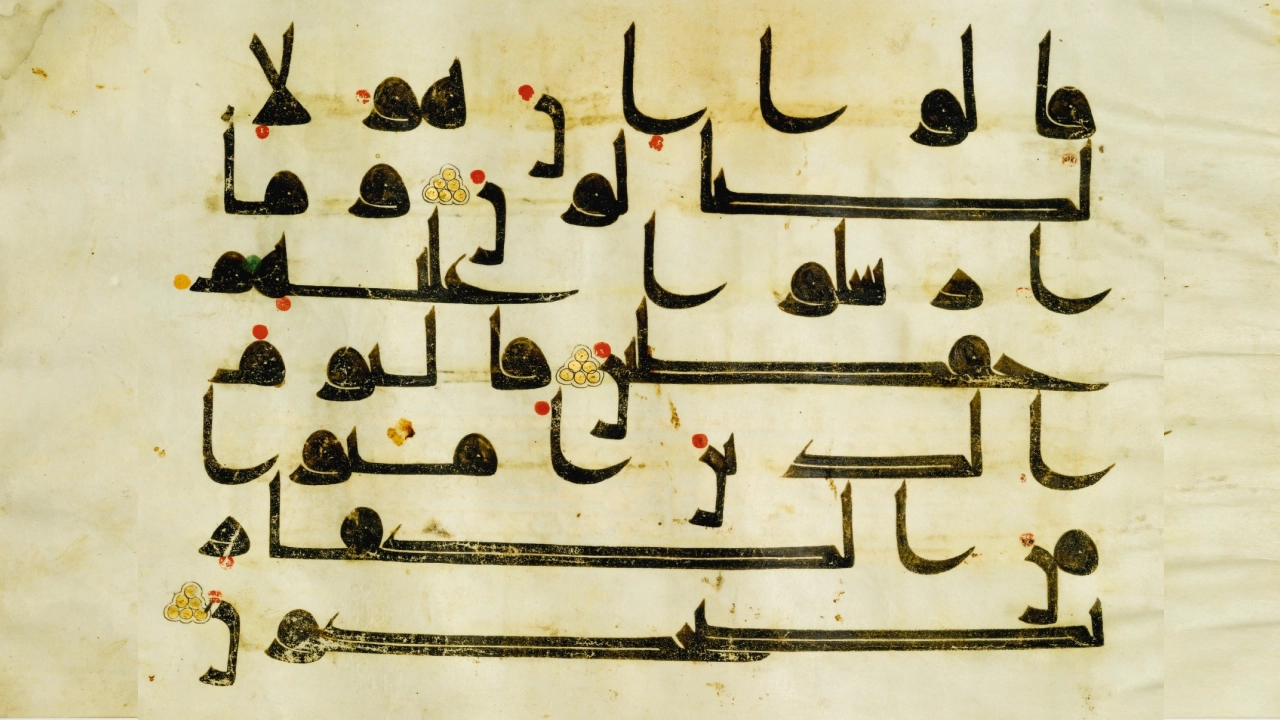
A folio from an early Quranic manuscript written in Kufic script on parchment. The bold, angular black letterforms with strong horizontal emphasis and minimal curvature are hallmarks of the earliest Kufic book hand. Sparse red and gold diacritical marks guide pronunciation without disrupting the monumental rhythm of the text.
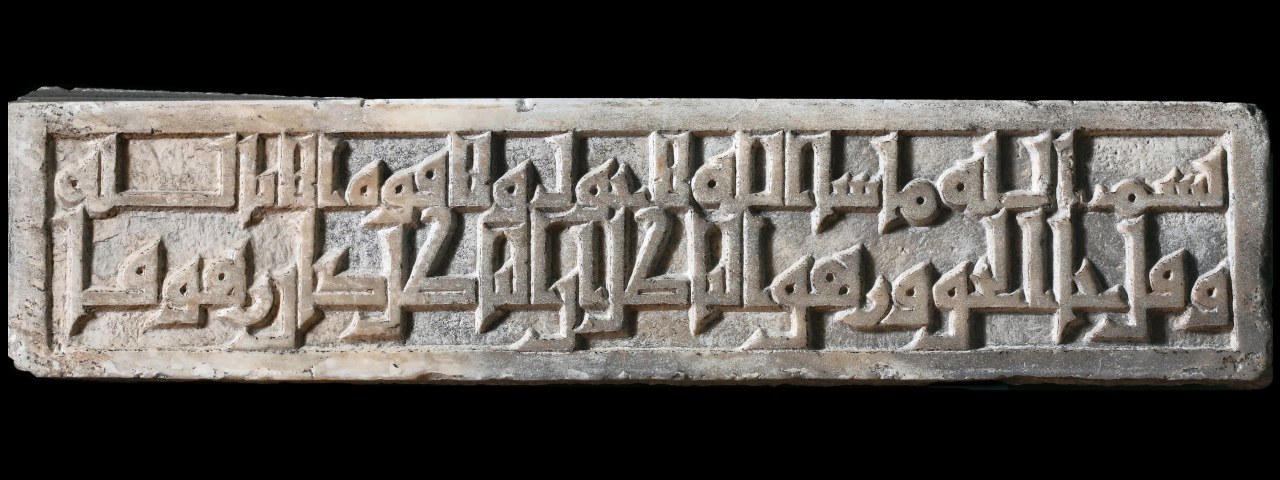
A carved stone frieze bearing a Kufic inscription. The script's geometric clarity and modular, straight-edged strokes made it ideal for monumental surfaces -- stone, plaster, and tile -- where letterforms needed to be legible at scale and durable over centuries. The angular structure reads as both text and architectural ornament.
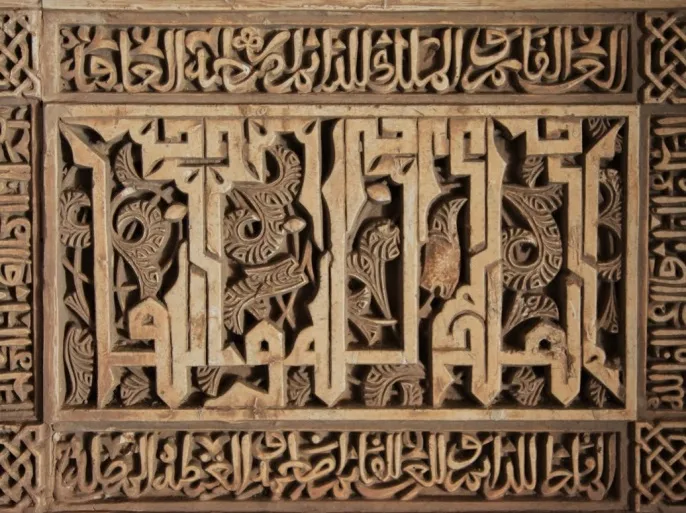
An architectural panel showing foliated Kufic, where angular letterforms are interlaced with vegetal arabesques. This style developed as Kufi moved from parchment to walls, allowing the script to merge with decorative programs in mosques, palaces, and madrasas -- text and pattern becoming inseparable.
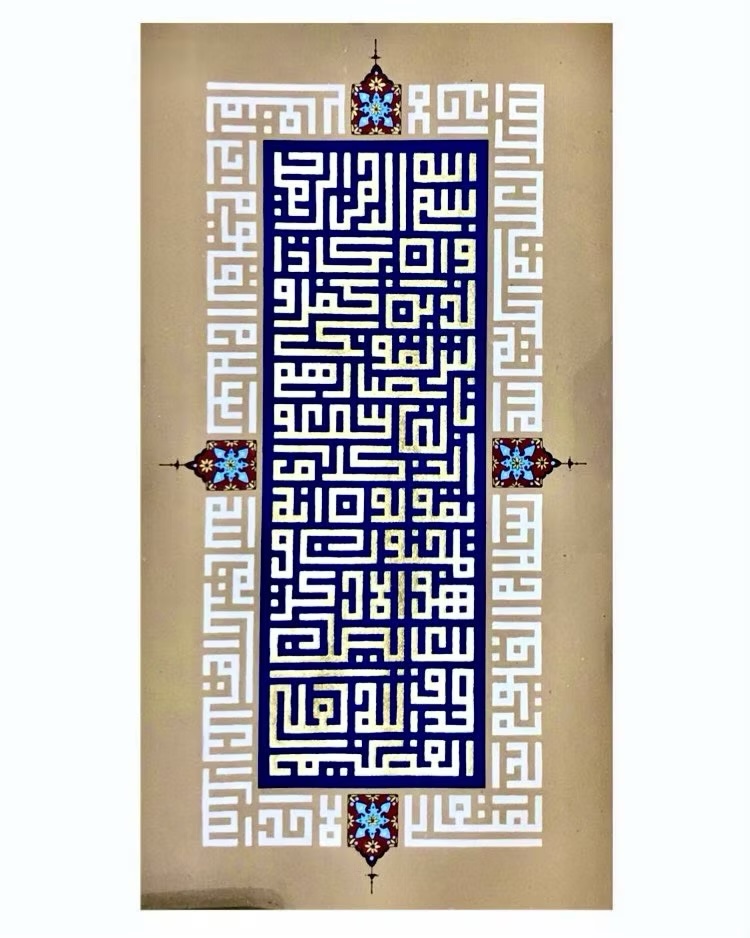
A Square Kufic composition where letterforms are reduced to right-angle geometry and arranged in a grid. The central blue panel and surrounding gold border create a dense, tessellated pattern that is simultaneously readable text and abstract decoration -- demonstrating Kufi's unique ability to function as both writing and pure geometric form.