Real-world examples of Maghrebi script across manuscripts, signage, and calligraphic compositions.
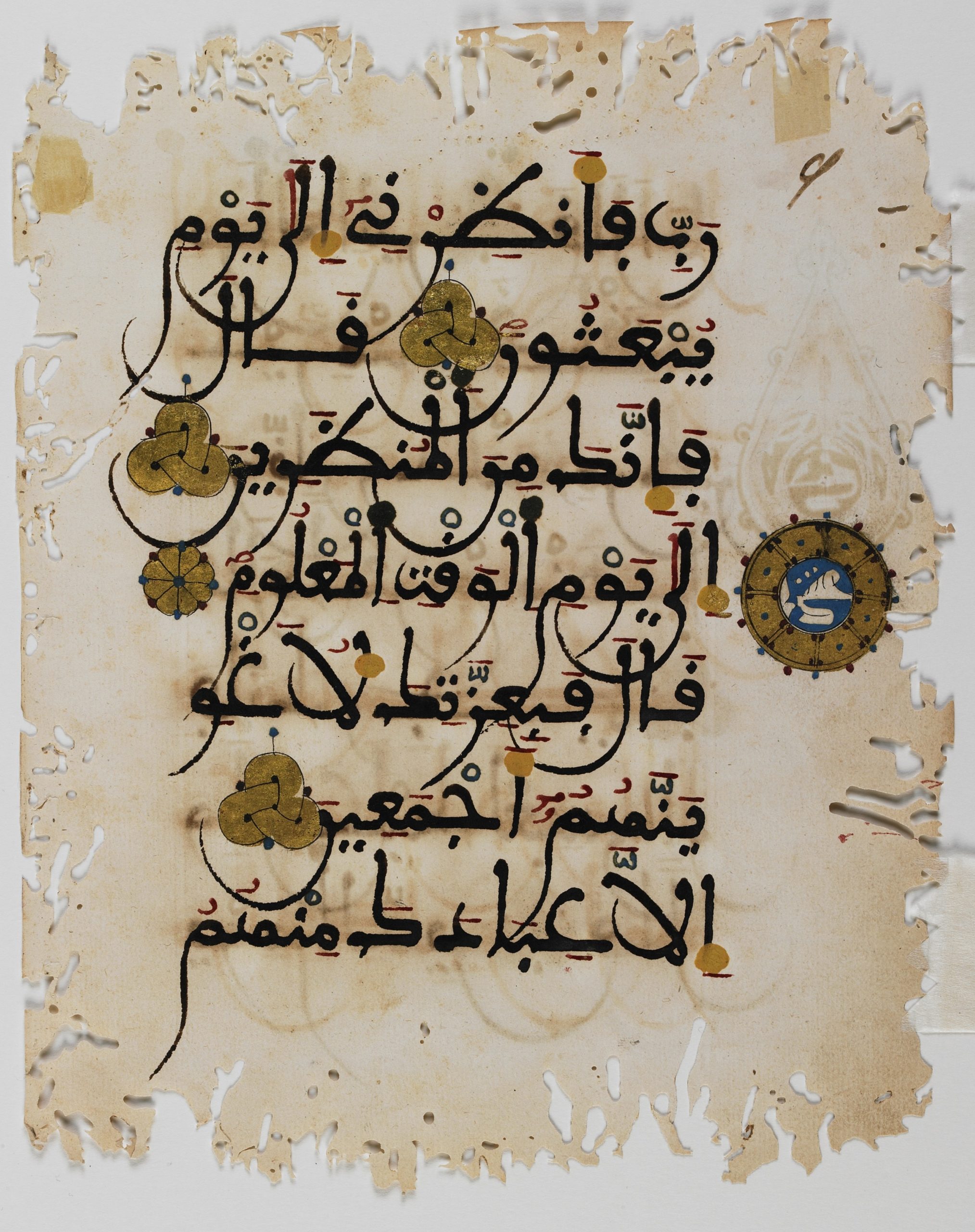
A Quranic manuscript page written in the Maghrebi hand, with bold black letterforms, colored diacritics, and gold tri-lobed rosette verse markers. The angular-yet-rounded letter shapes and distinctive dot placement reflect the regional calligraphic tradition of North Africa and al-Andalus, where Maghrebi remained the dominant book script for centuries.
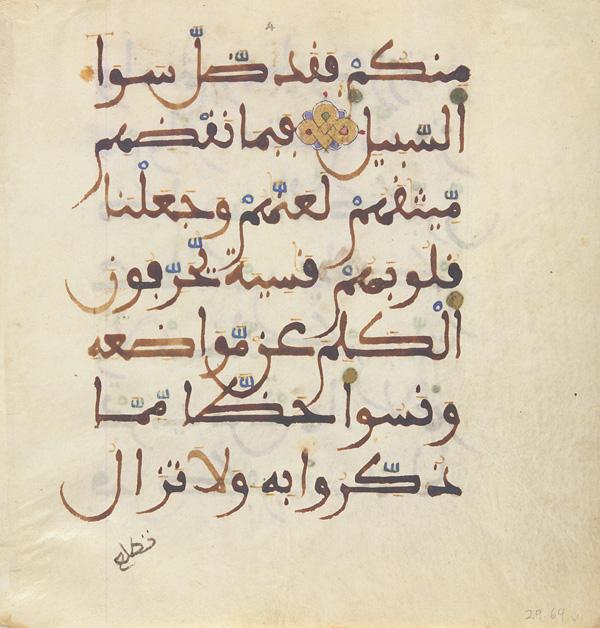
A folio from Sura al-Ma'idah (Sura 5) written in Maghrebi script with characteristic brown ink -- a regional convention distinct from the black ink standard in Mashriqi traditions. The warm, flowing letterforms and subtle knotwork verse marker show how Maghrebi book culture developed its own recognizable visual identity.
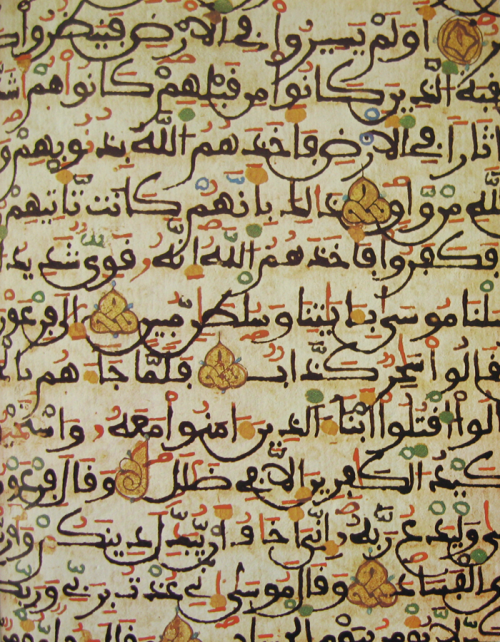
A densely written Maghrebi manuscript page with layered colored diacritics and marginal annotations. The script's rhythmic flow and distinctive letter proportions are visible even at this compact scale, demonstrating how Maghrebi remained both legible and visually coherent for scholarly and liturgical use across generations of readers.