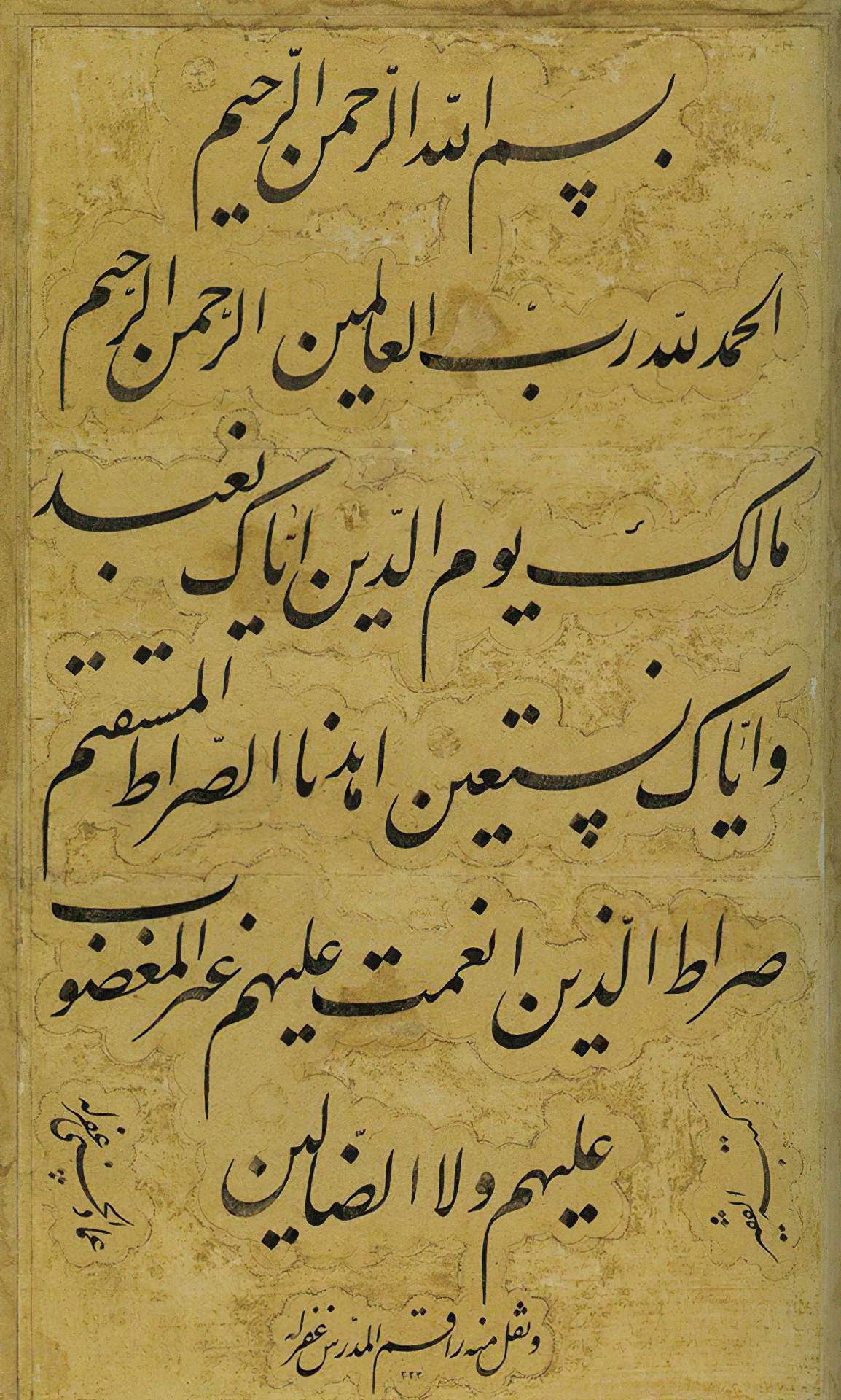
Surat Al-Fatiha written in Nastaliq on gold-flecked paper. The script's cascading diagonal flow and deep hanging strokes give it a lyrical, poetic quality. Nastaliq became the dominant script of Persian, Urdu, and Turkish literary traditions.
Real-world examples of Nastaʿliq script across manuscripts, signage, and calligraphic compositions.
Surat Al-Fatiha written in Nastaliq on gold-flecked paper. The script's cascading diagonal flow and deep hanging strokes give it a lyrical, poetic quality. Nastaliq became the dominant script of Persian, Urdu, and Turkish literary traditions.
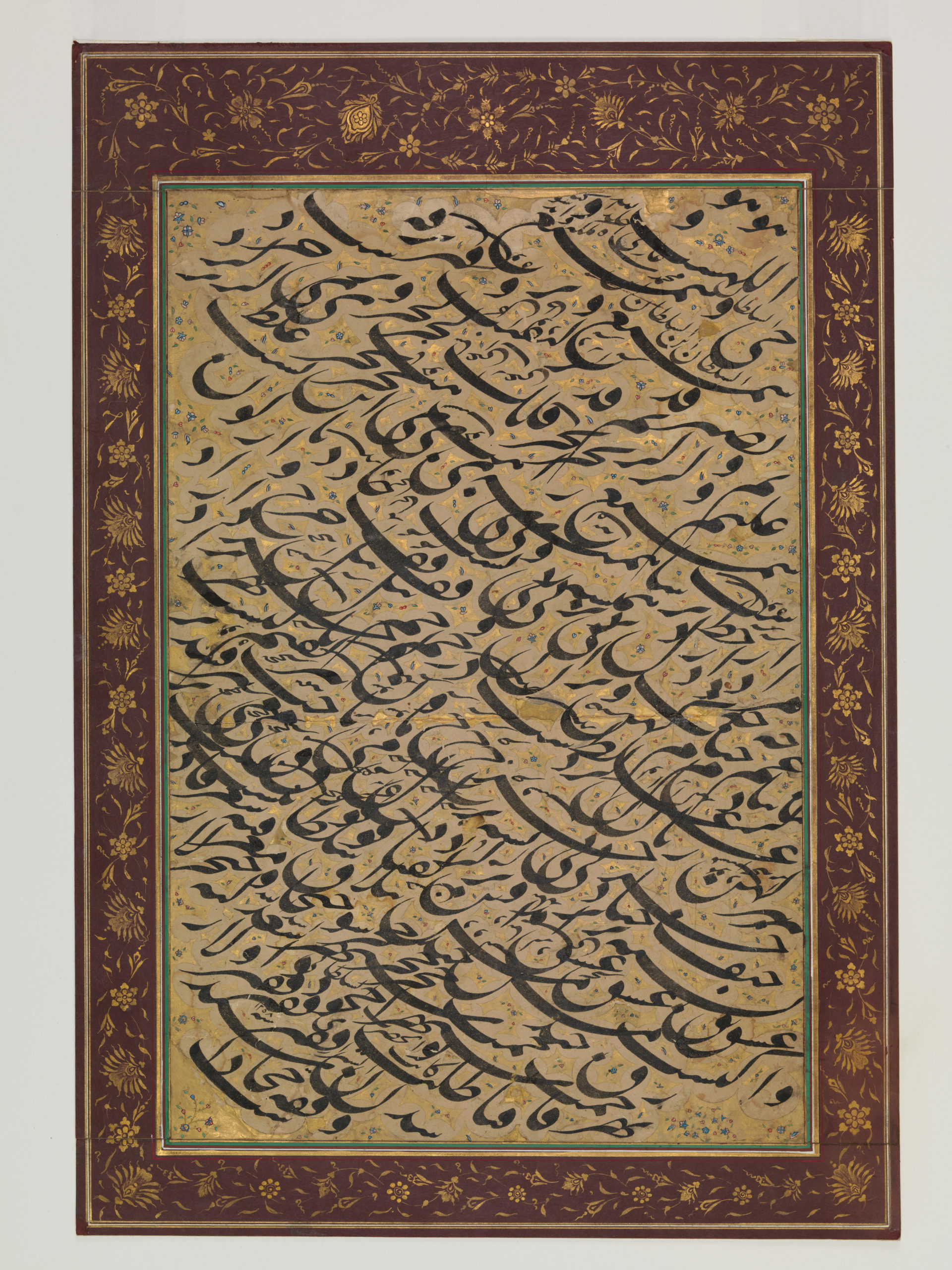
A densely composed Nastaliq calligraphic panel with a deep burgundy and gold border. The cascading lines create a woven visual texture where letters flow diagonally from upper right to lower left, a defining characteristic that distinguishes Nastaliq from all other Arabic scripts.
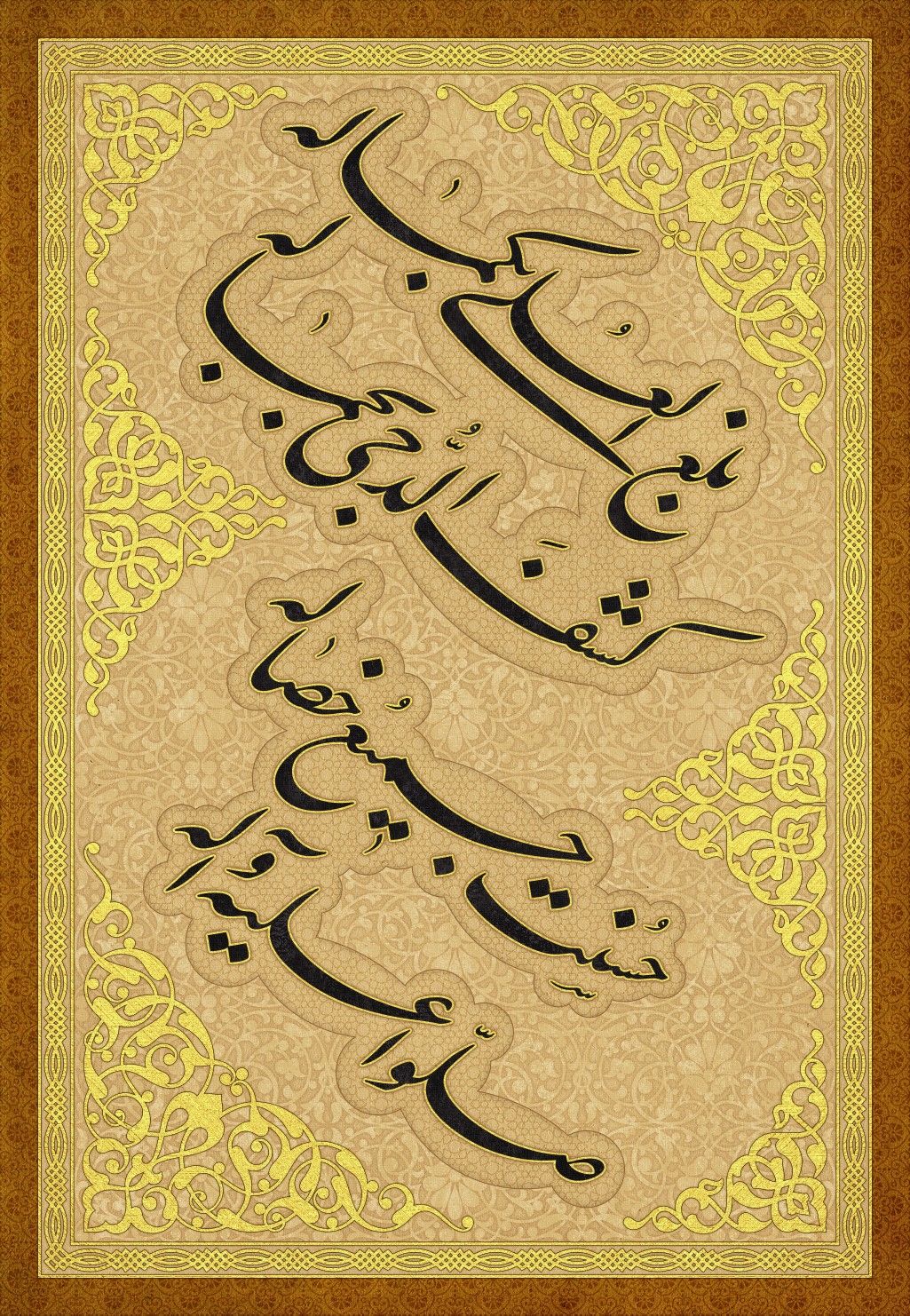
A decorative Nastaliq composition surrounded by gilded arabesque corners. The bold, sweeping strokes contrast with the intricate geometric illumination, demonstrating how Nastaliq was used not just for reading but as a central element of visual art in Persian book culture.
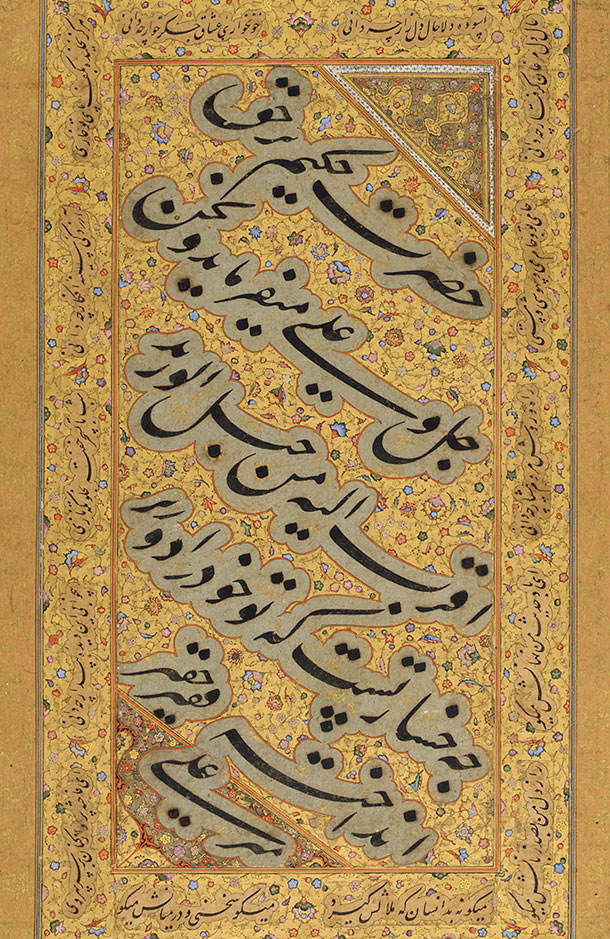
A Mughal-era manuscript page featuring large Nastaliq calligraphy surrounded by elaborate floral illumination. The opulent decoration and masterful letterforms reflect the high status of calligraphy in Mughal courts, where Nastaliq was the script of poetry, diplomacy, and royal correspondence.