Real-world examples of Thuluth script across manuscripts, signage, and calligraphic compositions.
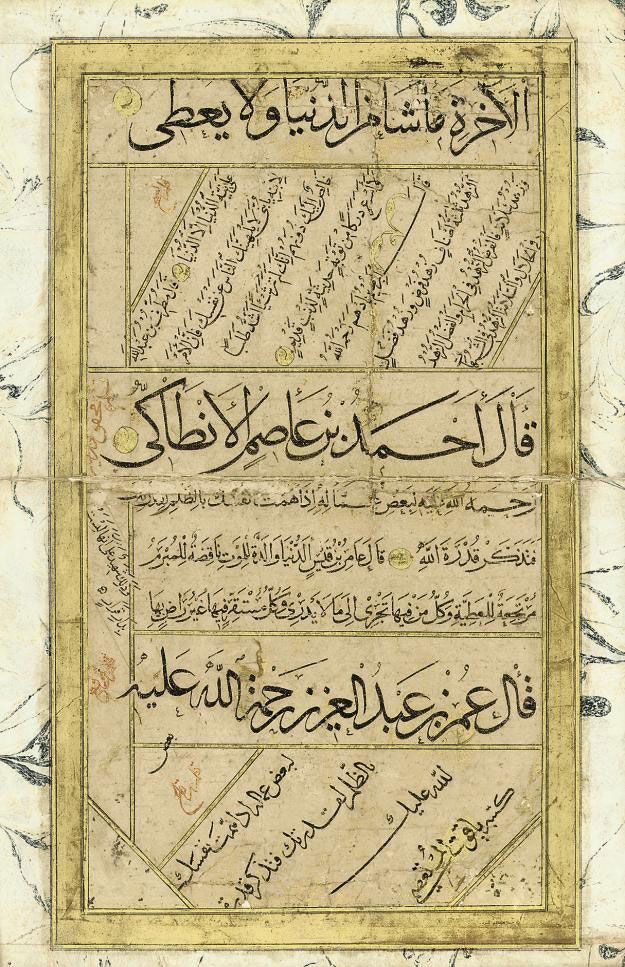
A calligraphic practice panel combining large Thuluth lines with smaller Naskh commentary. The Thuluth script's dramatic vertical strokes and sweeping horizontal extensions create a clear visual hierarchy, a pairing commonly used in Ottoman-era manuscripts.
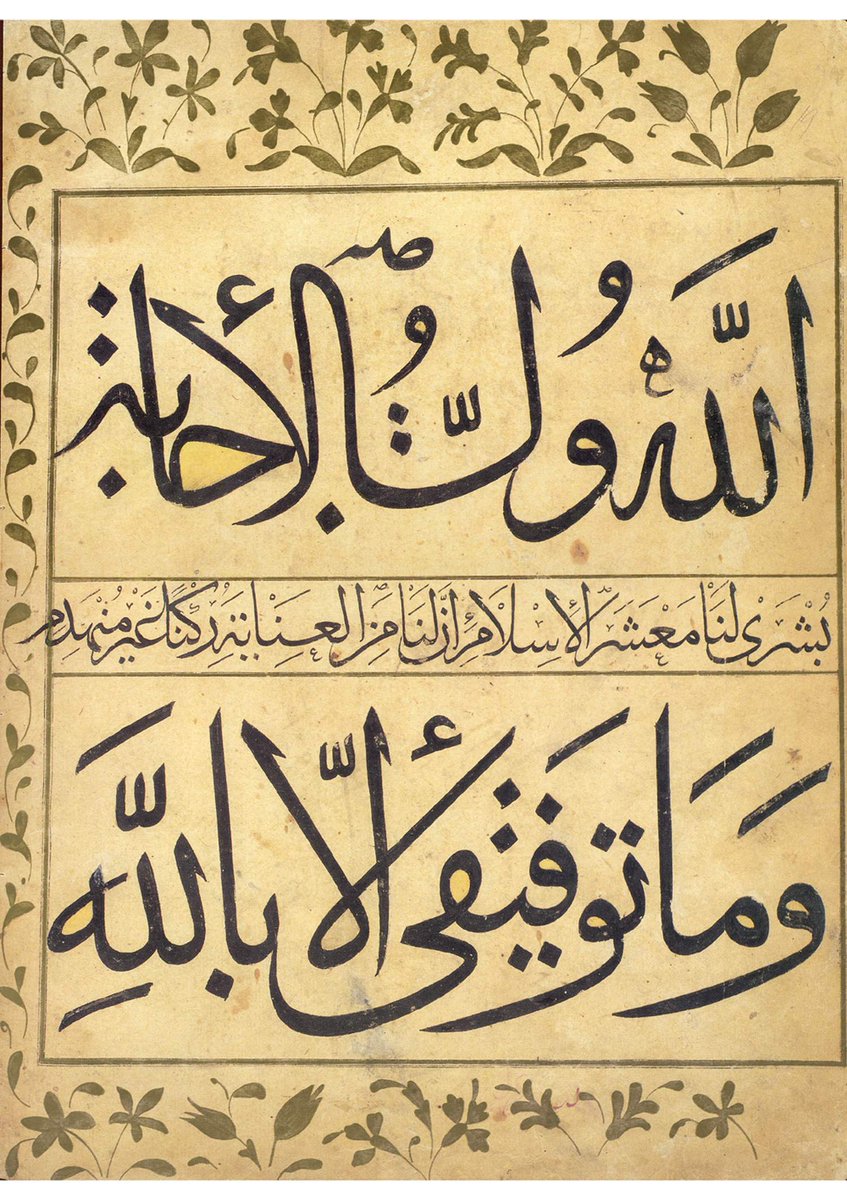
A framed calligraphic composition in Thuluth with floral border illumination. The large-scale letterforms demonstrate Thuluth's monumental character -- deep bowls, elongated ascenders, and dramatic thick-thin contrast that commands attention at display sizes.
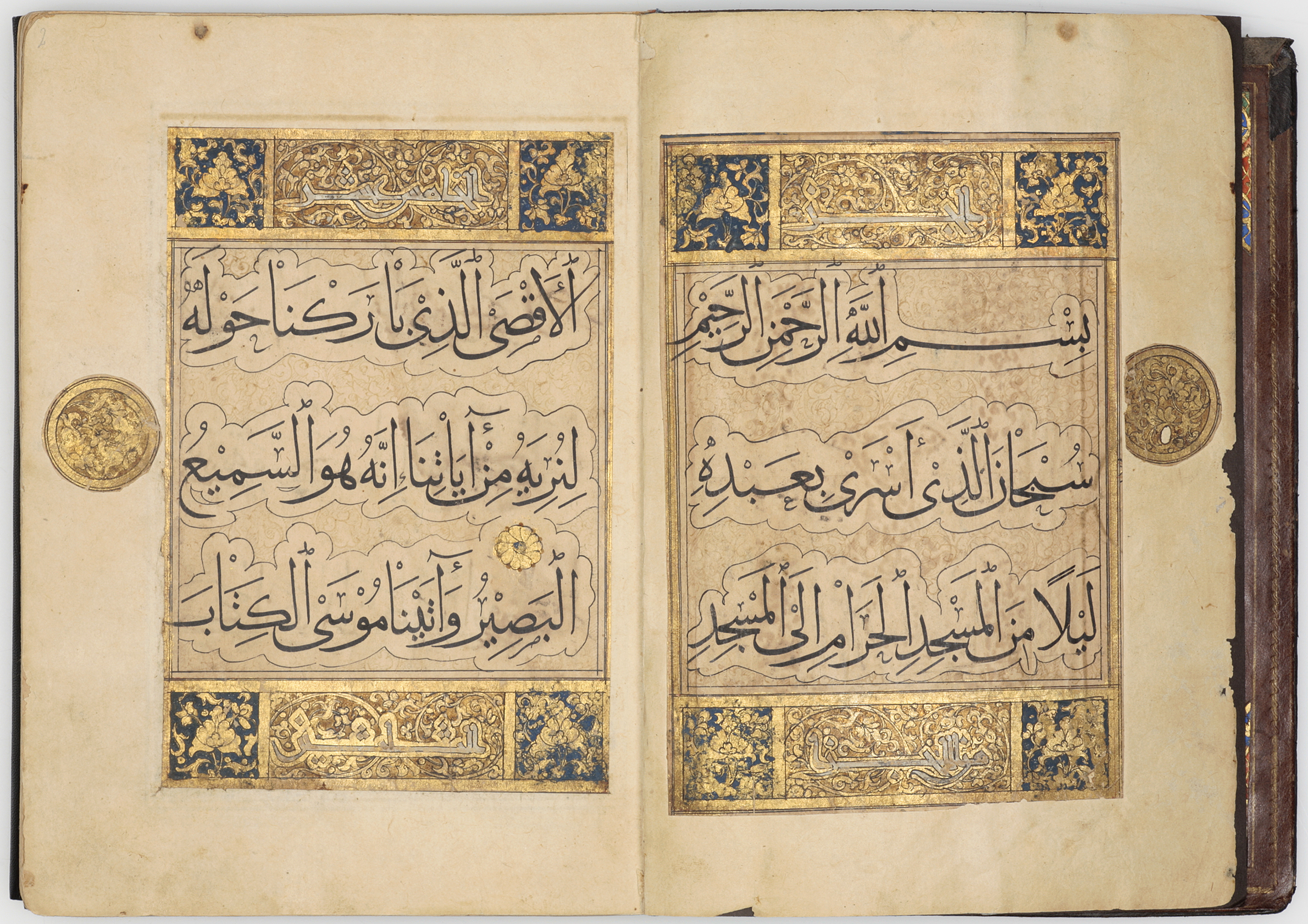
An opening spread from a 30-part Quran copied by Yaqut al-Musta'simi in Baghdad (1282–1283 CE). Yaqut is considered one of the greatest calligraphers of the Abbasid era and his Thuluth set standards still referenced today. Gold and blue illumination frames the text.
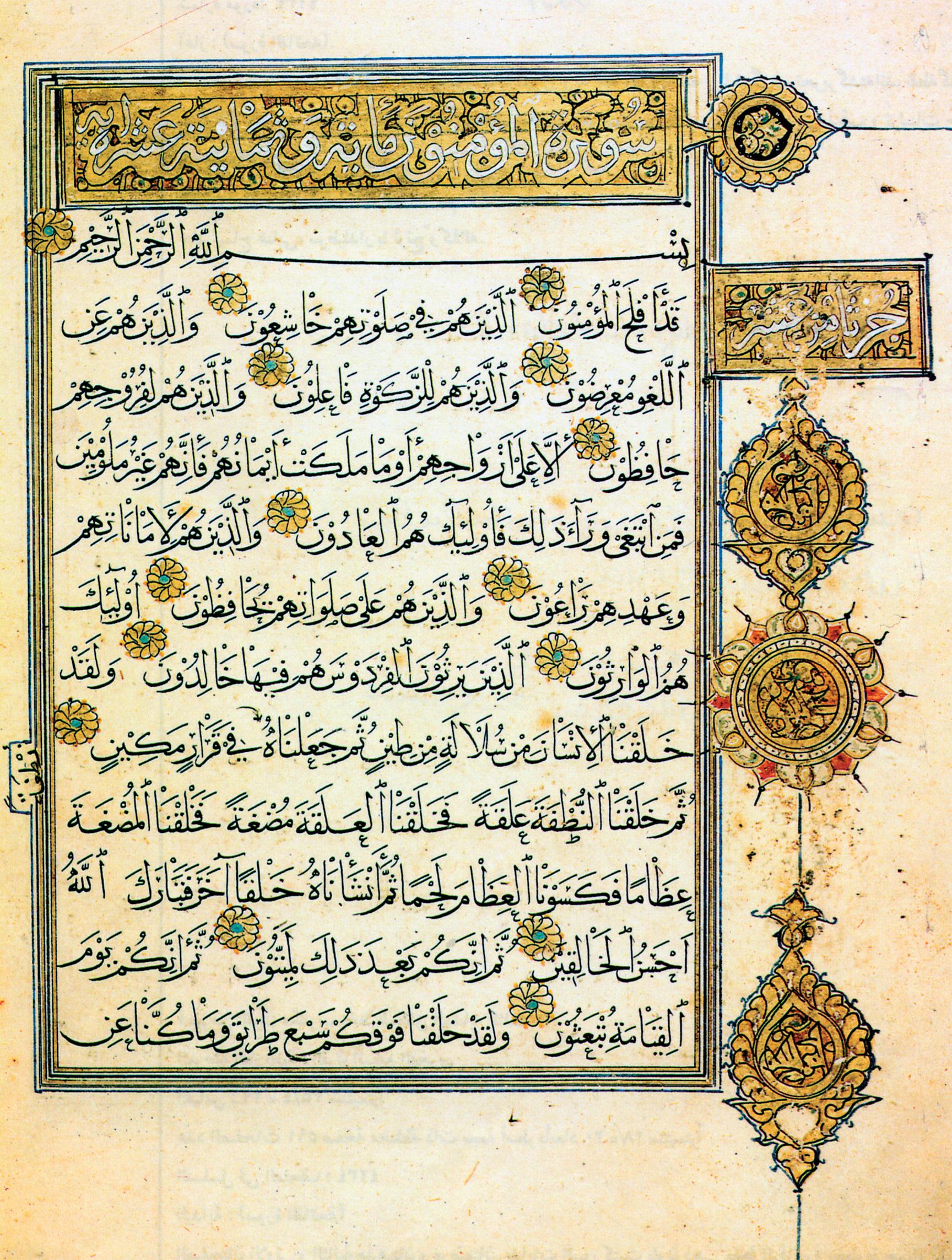
A richly illuminated Quran page where a Thuluth surah header sits above the body text in Naskh. This pairing was standard in Islamic book arts -- Thuluth signaled importance and hierarchy, while Naskh carried the continuous reading text below.